
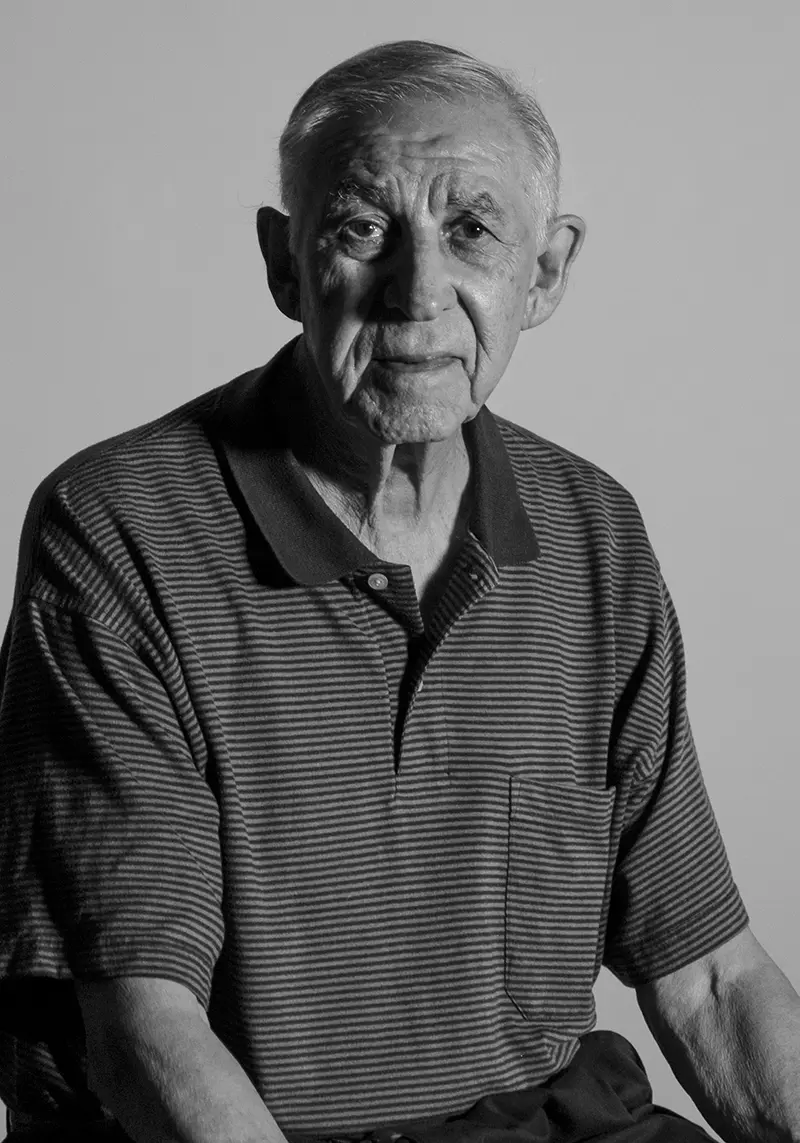
Joe Gonzales
THEN: came to Greenhill in 1965 to teach Upper School Spanish
NOW: retired
Moment: Starting the program with the Boys Club grew out of a group of parents saying, “I’d like my kid to grow up with kids from different backgrounds, and if that’s what we want, then we have to do something to make it happen.” Board members Jerry Trim and Harold Star were talking about wanting to have a diverse school. And sure, it was controversial with some parents – “Are the kids going to be qualified?” All that usual kind of thing – but it wasn’t a debate as to whether we were going to do it or not. That was the beauty of it. It was, “We’re going to do it, because it’s the right thing to do, and we want our kids to have this kind of school.” Steve Blanchard had been working during the summers at the Boys Club, so we were learning more about it. And the administration was totally behind it. The Board was going to find the money for the kids, and Bernard Fulton, during that period, was incredible: “You’ve got a good kid? Let’s go!” There was no hesitation. He would talk to the kid then say, “Let’s give it a shot!” We were constantly trying to meet all of these needs that were going on. And of course, the transportation system was not in place yet, so some Board members said, “Let’s buy a van!” But that was a major commitment. We were not prepared to run a transportation service. These days it may not seem like much, but that was a lot of money. And the school’s budget was tight already. You think money’s tight now! We were just trying to survive. But Bernard said, “We’ll find the damn money,” and he got on the phone, and then Zales Corporation and the Meadows Foundation came in, and we worked out a deal with the Boys Club, and the transportation started kicking in. We began to have some successful kids here, and that created a sort of peer pressure for other schools to join, and once the transportation system started developing, then other schools decided to join the effort. Bernard made many statements to the faculty that we were going to be a diverse school, that this is what this school is all about, This is what Greenhill is. Fulton was very clear on that. He was tough. And so what if people disagreed?
Reflection: My concern with the Boys Club initiative was always, “What is our responsibility to these kids, to their families?” We brought them in here. We said to them, “Come here.” But these kids deserved more. They were asking, “How do I penetrate your world and yet try to maintain my world?” It’s a struggle. One of our responsibilities as an institution is to tell these kids what they are getting into. Some of these kids felt that they could come in, get the academics, and not be affected… go back home and be the same kid you were. But what happened was we’re transforming these kids, and it is very difficult to have one foot in this world and one in another. Slowly, as the kids experience this kind of thing, they realize there is a price to pay. It’s not just coming here and getting an education, go to college, become successful. There’s a price these kids are going to pay… alienation, frustration. Your judgment of what happens through this experience can be both positive and negative.
What is your hope for Greenhill? The question now is, Where are we going? and What do we really care about? How can we see through the fog to what the school really stands for? Sometimes I think we get sidetracked in the search for excellence to try to be better than somebody else. I hope we can focus on being the best we can be at who we are. I hope Greenhill continues to hold onto the vision that we have had of diversity. But then, what is beyond this diversity? It may sound cliché, but How can we make a better world, a better Dallas? That’s what I wish for – for Greenhill to make a better world and a better Dallas.
Portrait by Eliana Campbell ’24
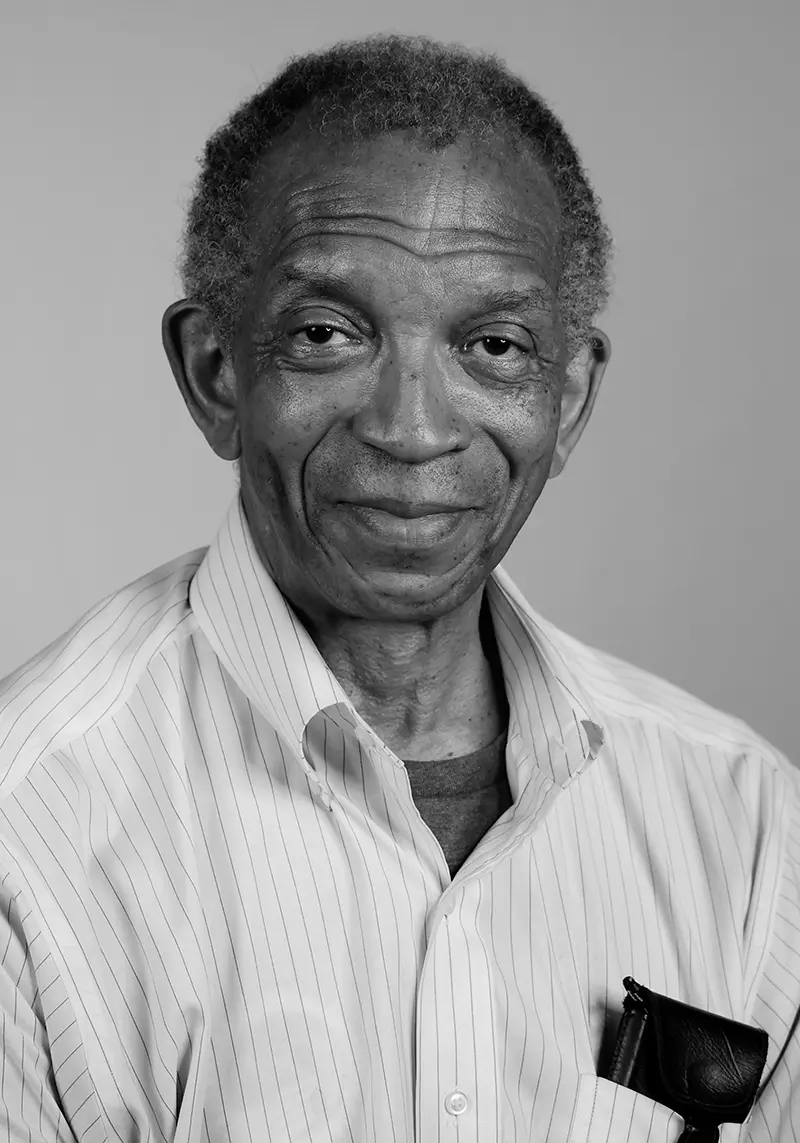
George Birdsong '75
THEN: came to Greenhill in 1967 as a fifth-grader
NOW: Emory University School of Medicine Pathology Department Professor
Moment: I don’t remember thinking about coming to Greenhill so much as “breaking ground,” although my parents said that there may be some “ugly incidents.” My stern mother said, “You are there to learn. If something happens, you tell us; we’ll deal with it.” Some folks in our neighborhood were actually mad at my parents, because they said, “You’re pulling one of our best students out of the neighborhood school!” And they took a little heat for that, but my parents didn’t care. So, I remember the first day, I walked into Mr. Tom Brennan’s history class, and I was about five minutes late, which as a 10-year-old was not really my fault. And I got chewed out, and I thought, Man, they told me this might happen, but it is happening already! Well, I was quickly disavowed of that idea, because some other poor kid came in about five minutes after I did, and he got it worse than I did. So the lesson learned: Don’t be late to this class!
Memory: Mrs. Becky Thornton was a key part of making me feel welcome here. This was, I think, probably October of 1967, and there was one kid who was a mischief-maker. I don’t know if he’d thrown a spitball or what, and then he said a disrespectful word that starts with N out loud enough for her to hear it… and she turned around with a look that would set a stack of wood on fire. And she must’ve been counting to 10 so that she didn’t blow up. She wasn’t going to have that at all. She said, “Class, close your books.” And she just stopped class. And this was only about 15 minutes into a 45-minute class. And she spent the rest of the class talking about why that was wrong, some history about the word, and was very calm and ended with words to the effect of, “I don’t want to ever hear that again.” And that was that. What that did in the mind of a 10-year-old said, Oh, this is just like the rules at home. We can’t use that word. Can’t use the word at home; can’t use it at Greenhill. And I’ll never forget that, because then my mindset went from they are allowing me to come to their school, to I’m a part of the school; I’m wanted here as much as anyone else, so long as I do well and don’t cause trouble.
Reflection: I didn’t think about the lack of Black faculty representation very much. If I ever felt like I needed some guidance from a Black person, that was there for me in the family or in my neighborhood. At Greenhill, Dr. Jim Hendrix taught a Black history course, which I took my senior year. On the first day, he walked in and said, “I shouldn’t be teaching this.” He was almost apologizing for not being Black. I had the attitude, Well, this is going to come from a different perspective, but I can still learn something. He’s going to know more than I do. We read the Ralph Ellison book, Invisible Man. The fact that there was a Black history course taught in 1975, even if it’s not the way one ideally would have it, was a form of acknowledgement, or at least that’s how I remember perceiving it.
What is your hope for Greenhill? It is gratifying to me that a large percentage of the students here are people of color now, and I definitely want to keep that going. Hopefully there’s a lot of actual interaction. I would hope that there’s an active effort to actually get the folks to know each other beyond, Yeah, I’m on the tennis team with this guy from another ethnic group. That can be both at a social level as well as at an academic level. I hope that you’re going the next step beyond that.
Portrait by Isabel Bhatia ’26
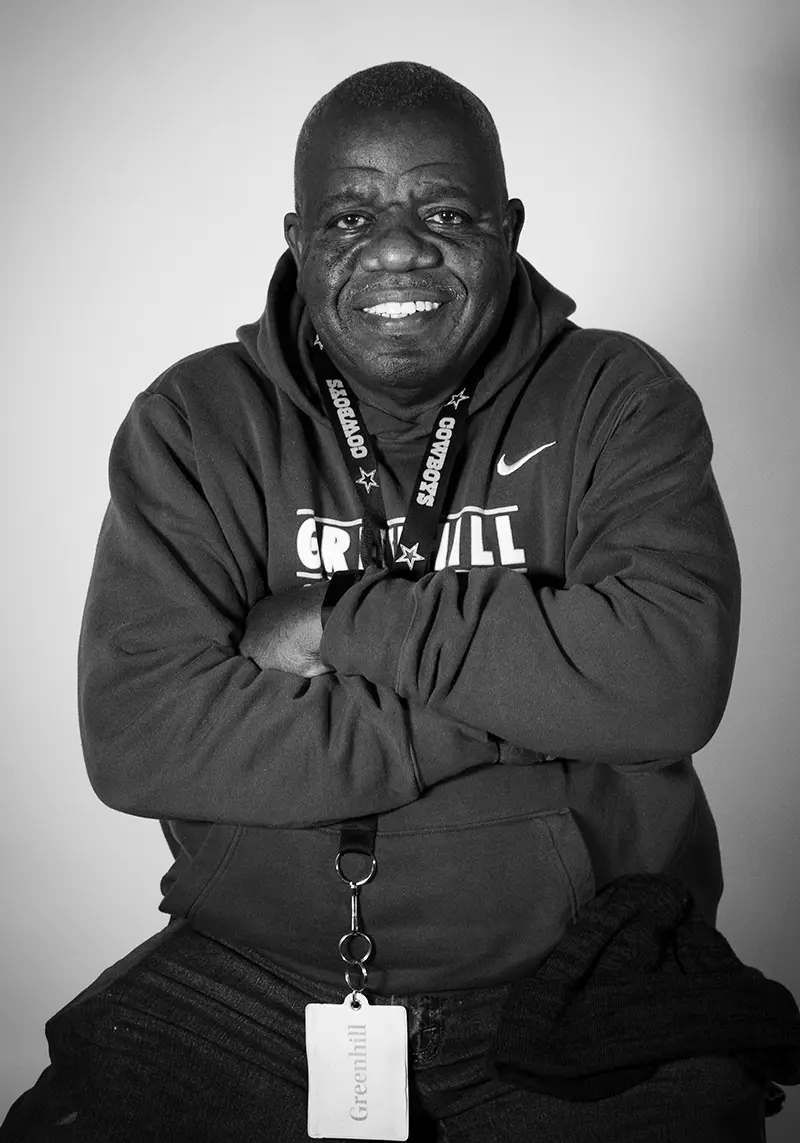
Ron Ivery
THEN: came to Greenhill in 1982 to work in the Maintenance Department
NOW: working in Facilities and Operations Service at Greenhill School (1982 – present)
Moment: Well, about the peacock feathers: I made a terrible mistake, boy! I don’t know how to get out of it, neither. Well, I told the kids, “I’ll give you a feather when it’s your birthday, or if you lose a tooth.” But now, I can’t win. Now, I will hold my ground when they come to me saying, “It’s my half-birthday!” I ain’t got nothing to do with no half-birthdays! I don’t count halfbirthdays. Then some of them say, “But it is my birthday.” And I have to say, “You just had one the other day!”
Moment: Linda White, Lower School teacher, came in while I was in the cafeteria eating lunch, and I noticed she was just looking at me strange. Just kept looking at me, and I thought, “I wonder what did I do?” And she came over there and asked me, “Would you be interested in going on the campout with the second grade? We’re having a hard time finding someone. We would like to have you. The kids know you, and they love you.” And those things are a blast, and so I said to myself, “Boy, it’s good to get away from the guys I work with sometimes!” But this one kid, I’ll never forget: he was experiencing things late at night, and the kid just started crying! It was wild! But it’s fun. They’re cute. And they always know who is the head of the cabin!
Reflection: Mrs. Lucinda Carter, former Head of Middle School, was great in the sense that a lot of things that the faculty was involved in, when they had some function, maintenance was usually left out. But she changed all of that. She was the one who just noticed we were not getting recognition then. They knew us, but we weren’t being honored for the time that we’ve been here. But that changed because of her. You had that real closeness then. And Kendra Grace, CFO, and Lee Hark, Head of School, have been great to our department. I mean, just for the experience like the pandemic. They thought of us; they were concerned about us. I don’t take those things lightly, because some things that they’ve done for us: they paid us when we didn’t have to come in; they didn’t have to do that.
It’s been a great place to me, man. I’ve been here 43 years. 43 years! I’m still having a blast. It’s become a big part of my life, man, as a family. I lost my wife three years ago, and I say to myself, I still have sisters and brothers, but hell, I got a family here at Greenhill. I say, Boy, I hope I can work here a long time. They let you go and do your work. At Greenhill, they let you go do your job.
Reflection: Some of the kids know that I won’t forget the face. I might forget the name, but I won’t forget the face. And when I see them later, it just brings joy and tears in my eyes, and I hear that some of them still ask for me. It’s kind of a rare thing, staying at one place this long. Let me tell you something: for someone with a high school education, this is the best job I’ve had. Sometimes, I break down in tears. This place has been great to me. This has been like a second home. I feel I can just be my full self here.
What is your hope for Greenhill? I think my wish and my prayer for Greenhill is, Do we know what we want to be? We are a great school. I think the teachers are great. I think my biggest question is, What do we want to be?
Portrait by Sofia Valli ’23
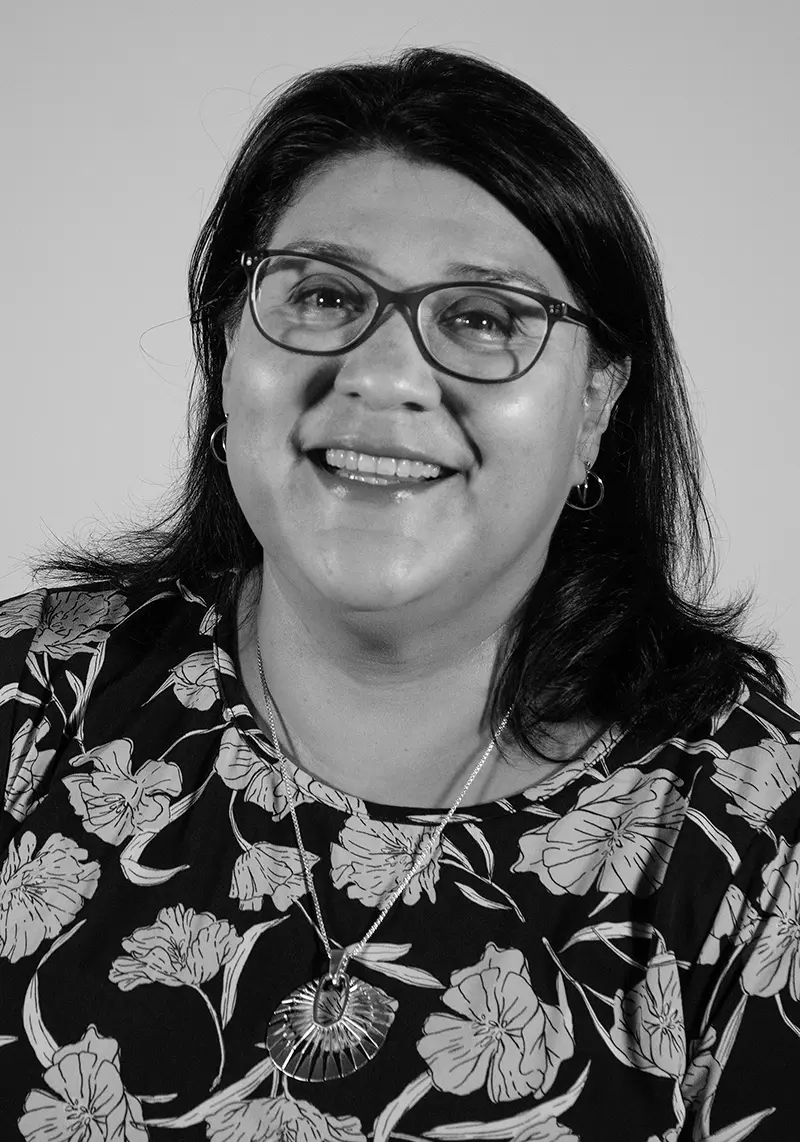
Adrienne Maldonado ’93
THEN: came to Greenhill in 1982 as a second-grader
NOW: insurance / employee benefits – Unum Group, U.S.
Moment: By fourth grade, I made a very key friendship, with Melissa Elwell. She’s just a phenomenal person. She was being raised by her housekeeper, Mary, who lived across the street from my father. The one thing that I took away from fourth grade that just transformed my experience here, and I think it’s true: you just need that one friend. You don’t need a lot; you need one. She was the one. I just felt like she was my gift from Heaven to help me get through. Once I had her friendship, it was just like, you know what? I’m okay. From there, I could just start to navigate Greenhill better. But up until that point, I was there, but I really was struggling. Melissa saw me. That is so rare that people see you. She saw me, and she was just all about love. One weekend, I was visiting my father, and I look up, and Melissa’s across the street, and I’m like, “Melissa?” She’s like, “Dandy! What are you doing here?” I said, “This is my dad’s house.” She goes, “Well, this is Mary’s house.” So, it was just one of those deals where it was just like with her, there was no shame. I didn’t have to hide anything. I didn’t feel like I had to hide or obscure or whatever. It was just like she just accepted me.
Reflection: We were on the Boys Club bus for an hour, 90 minutes, every morning, and so there was conversation. There was lots of music. I will say that the reason I have such an anthology of music is because I rode the bus. And so, there was also that camaraderie in the morning of everybody who had to do the same thing. I still remember Richard Greagor running to go get his Cinnabon before the bus came. And Prince Camp was here, and I remember when he devastated everyone when he decided to be a cheerleader, because he wanted to dance. And so, there were people that I saw as brave or doing things that were brave, that I admired. When Prince did that, I remember thinking, “Wow, that took guts to go from being a football player to a cheerleader.” And he didn’t blink twice. He just did it. And it was stuff like that, where I saw other people doing things that seemed courageous to me at the time, and that made a difference.
And then slowly there would start to be more of us. And the more there are of us, it’s more of a shared experience. We’re no longer the novelty. We’re no longer the experiment. We’re kind of “proven” at that point that, yes, you can bring these kids here, and they can be successful, and they can fit in and adjust. I did feel tremendous pressure to prove that the people who took a chance on me were right. And so, I carried that with me: “They bet on me. And so I’ve got to become something, because there are a lot of people who are giving a lot of money so that I can do this.” And so, there was that obligation. I was “the scholarship kid.”
What is your hope for Greenhill? I can’t tell you how happy I am when I open up The Hill, and the faces I look at are just so diverse. And you don’t find that anywhere else. Greenhill is really unique. And so I hope that continues, the uniqueness, the willingness to innovate, to welcome diversity, to foster critical thinking, which is so lacking in the world right now and is so needed. What I really loved about Greenhill is that you can be lots of things. Greenhill allowed you to do anything you wanted to do. Anything you could dream about, they were like, Okay, yeah, let’s do it.
Portrait by Sumedha Rapuri ’26
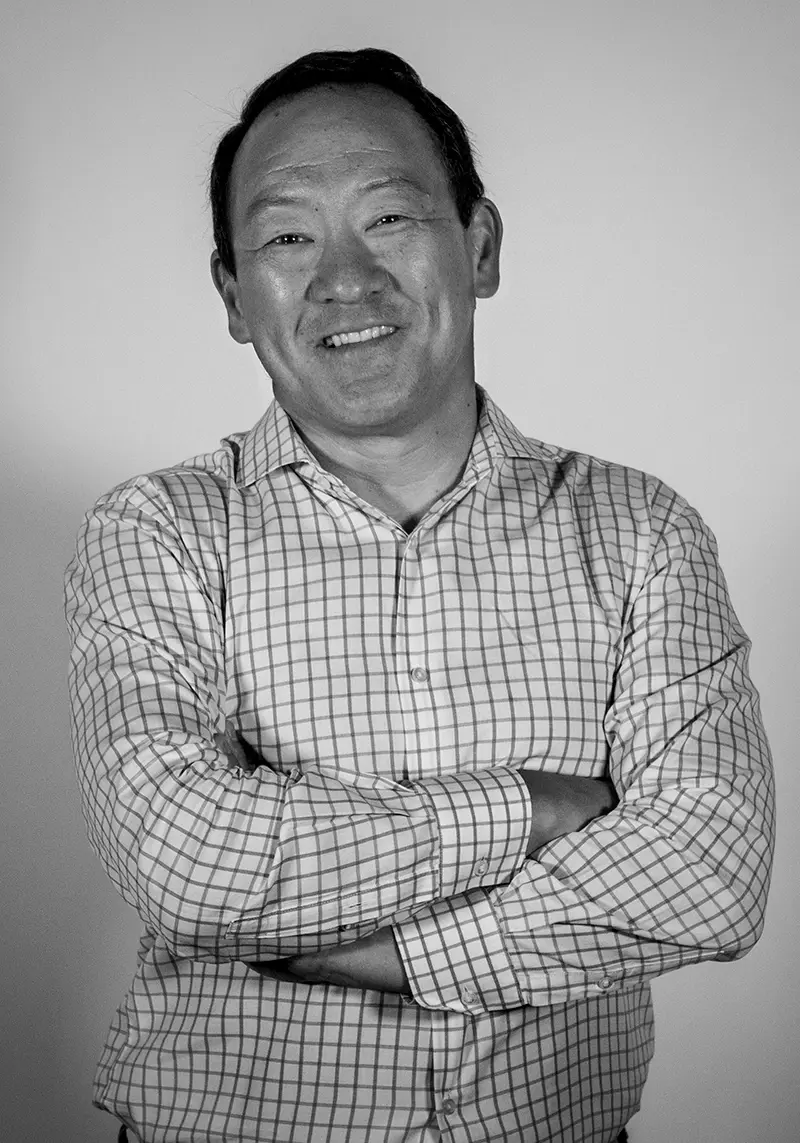
Roy Kim '88
THEN: came to Greenhill in 1983 as an eighth-grader
NOW: Finance/Capital Markets Executive; completed term as Greenhill Board Chair in 2025
Moment: I’m thinking, “Well, if there’s a place to send all three of my kids that are all very different, Greenhill’s probably the place to go.” But I had gotten a little concerned that maybe this is not the same place that I left all those years ago. I was walking back to my car after an admission tour, and I was not feeling great. Ron Ivery drove up in a golf cart and said, “I’m getting old. I’m not great with names, but I know you.” I said, “Hey, Ron.” I assumed he was being polite, but then he said, “You’re a pizza boy,” and I knew that he knew exactly who I was! That’s because when I was a junior in the Upper School, we discovered that there was a loophole in the policy that did not forbid us from ordering pizza to campus, or at least Upper School Dean Bob Murphy could not find a rule prohibiting it. I think we were the first to start ordering pizza to lunch on that payphone at the cafeteria and then pick it up right in the circle. Unfortunately for Ron, it meant we left all our boxes out there on that little patio next to the cafeteria. At any rate, I realized that he knew exactly who I was, and he came up to me and gave me a hug, and I immediately started feeling better about this. I was like, Okay, if he’s still around, and he still is being the way he is, maybe it hasn’t changed so much. Within a couple hours of walking around, I realized it still very much was the same place.
Reflection: It was not until I came here that, and I don’t remember exactly what the context was, but someone conveyed to me that “diversity” is about strengthening ourselves. It’s not just about getting along, but it’s about reaching levels of potential that we probably couldn’t hope to reach without that diversity. And that was mind-blowing to me, because it’s enough to say that “we need to get along.” There’s nothing wrong with that goal, and it’s a hard enough goal to achieve, right? But this notion that diversity went well beyond that, it went to opening our minds and broadening our perspectives and being able to think more, better, faster, differently. It was kind of eyeopening to me.
What is your hope for Greenhill? I would like to see Greenhill continue to do the work that it’s done, to continue to be formative to students in the way it was for me. I think, culturally and ideologically in our country, it’s a very difficult time and, therefore, it’s a difficult time to raise kids and educate kids. And so, I would like to make sure that we maintain balance here, however you want to define that. Balance. Having enough vocal opposing views around that you can debate an idea, and having the school diverse enough to where it doesn’t feel like there is a bully majority. I hope that this is a place that, even if you’re one of two or three people that have that view, you feel comfortable expressing it and will be open to challenges to it. And I would love to find a way, and this is a challenging one, to bring more socioeconomic balance to the community. Now, I feel an additional weight as Board Chair, because I think all the things that were fundamentally Greenhill still are. I think all the fundamental drivers that brought us to where we are today are still in place. So, to me, these are the kinds of times that we have the most to contribute. Our community, in my mind, is no doubt part of that solution. We need to rush as many kids as we can through Greenhill and send them to D.C.!
Portrait by Sofia Valli ’23
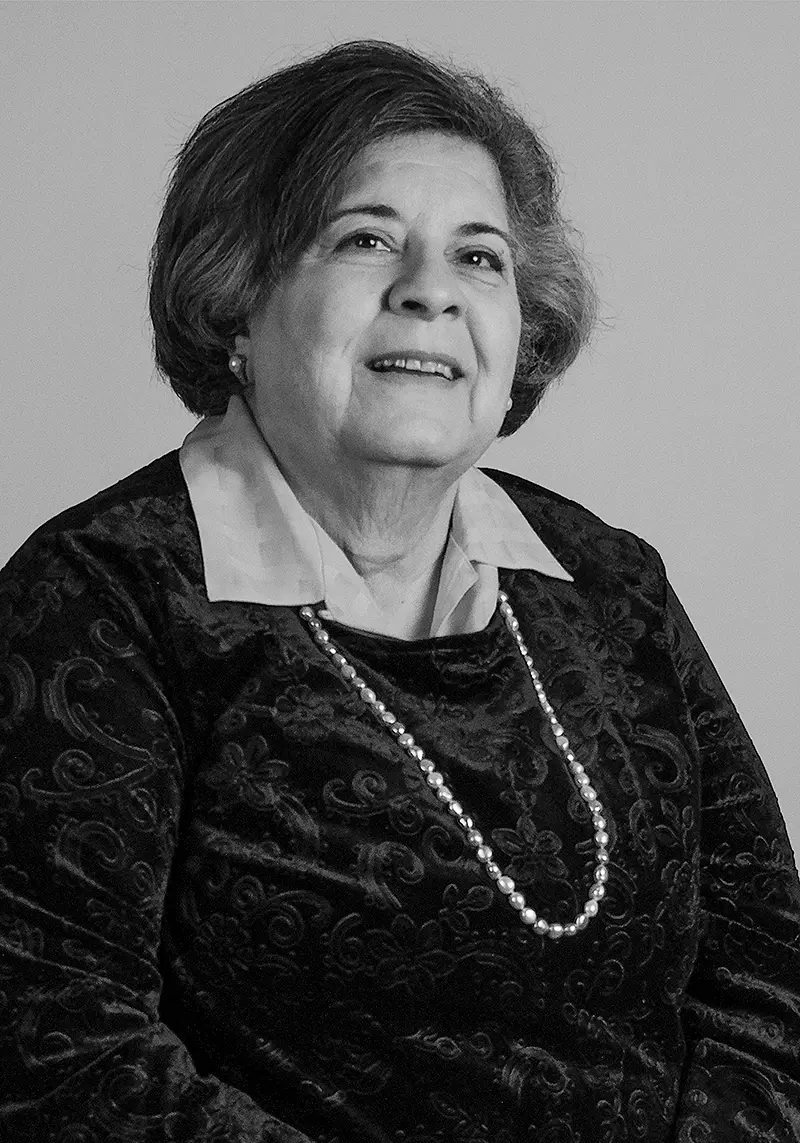
Hind Jarrah
THEN: came to Greenhill in 1989 as parent to Salam ’95, Houda ’97, and Noor ’01
NOW: retired Founder / Former President of Texas Muslim Women’s Foundation (Dallas)
Moment: My daughters brought Islam to Greenhill in more ways than you can imagine. We always feel that we are ambassadors. Dr. Ray Buchanan gave Houda a project, and she wrote about Islamic art. And at that time there weren’t that many resources, but at home I had collected all kinds of things. I used to do presentations about the Arab world and Islam, so I have a big library. So, I gave her one of the books about Islam and Islamic art, which is tied to the faith itself. The art itself can tell you what the faith is. She got Dr. Buchanan to become a fan of Islamic art after her project! I met his wife several years later, and she said, “You guys have started him now. I cannot stop him about that!” And at Ramadan, your teachers were amazing. Your teachers understood what my daughters needed to do; they respected that, and nobody was teasing them that they’re not eating or anything like that. This is a beautiful place. You have beautiful people, beautiful spirit. I wish this whole thing could be applied to the rest of the world.
Reflections: We took Noor to Rice, to Houston, and came back on a Sunday. On Tuesday, September 11th happened. And that turned our lives upside down. People knew that I used to do presentations about Arabs, but we were not allowed to speak about the faith, Islam; when you go to schools, you talk about culture. You don’t talk about the faith. And I got all kinds of requests to speak about Islam and Muslims. I went to all the schools, to all high schools, book clubs, whatever comes to your mind. People were trying to figure out what’s happening. The other thing is our community itself, especially the women, were asking, “What’s happening? How is it that a faith that we love dearly, that we practice, has this kind of image?” Being at Greenhill wasn’t easy, because as Muslims, there were so many things that they did not do like the other kids. So, they were aware that they were Muslims. They were aware that they were different. They were aware that we were newcomers to this country. They knew that, but they did not let it push them down. They rose to the challenge. And I think they rose to the challenge because Greenhill and Greenhill teachers supported them. Some of the kids, not that many, but some of the kids gave them a hard time, but the teachers… one of the major Arab poets wrote, “Stand up and honor the teacher. The teacher is almost like a messenger from God.”
What is your hope for Greenhill? That it maintains its emphasis on quality teachers, continues to recognize the role of the teachers and that it brings people together, that it makes people realize that we are all God’s creation. The Creator, in his wisdom, made us different for a reason. So, it’s not just to get to know each other. I know you, you know me, but rather how can I help you and how can you help me? That’s also inbuilt in this passage from the Quran: Indeed, the most noble of you in the sight of the Creator is the most righteous. Not the most strong, not the most wealthy, not the most beautiful, not the most intelligent. It is the person with righteousness. If you can instill that spirit in your students, not just now, but for generations to come, we can leave this a better place for the generations that will come after us. That’s my dream.
Portrait by Cassie Rosa ’25